

Introduction
In today’s fast-paced world, both individuals and organisations often pride themselves on being busy, equating a jam-packed schedule with success. However, this busyness comes with hidden costs, particularly when it arises from ineffective goal management. While you may feel productive, the reality is that you could be spinning your wheels without making significant progress toward your most important objectives.
The Illusion of Productivity
How often do you hear someone boast about their overloaded inbox as if it were a badge of honour? Through my work with companies and individuals, I’ve encountered countless people who believe that the sheer volume of unread emails somehow reflects their importance or productivity. Yet, a backlog of emails might actually signal the opposite: a lack of effectiveness.
Another common response I encounter when asking individuals about their critical actions for the day is, "Let me check my calendar." This reliance on external scheduling reveals a lack of clear, intentional focus on what truly matters. It indicates that the day’s activities are dictated by others' demands rather than aligned with one’s own key goals.
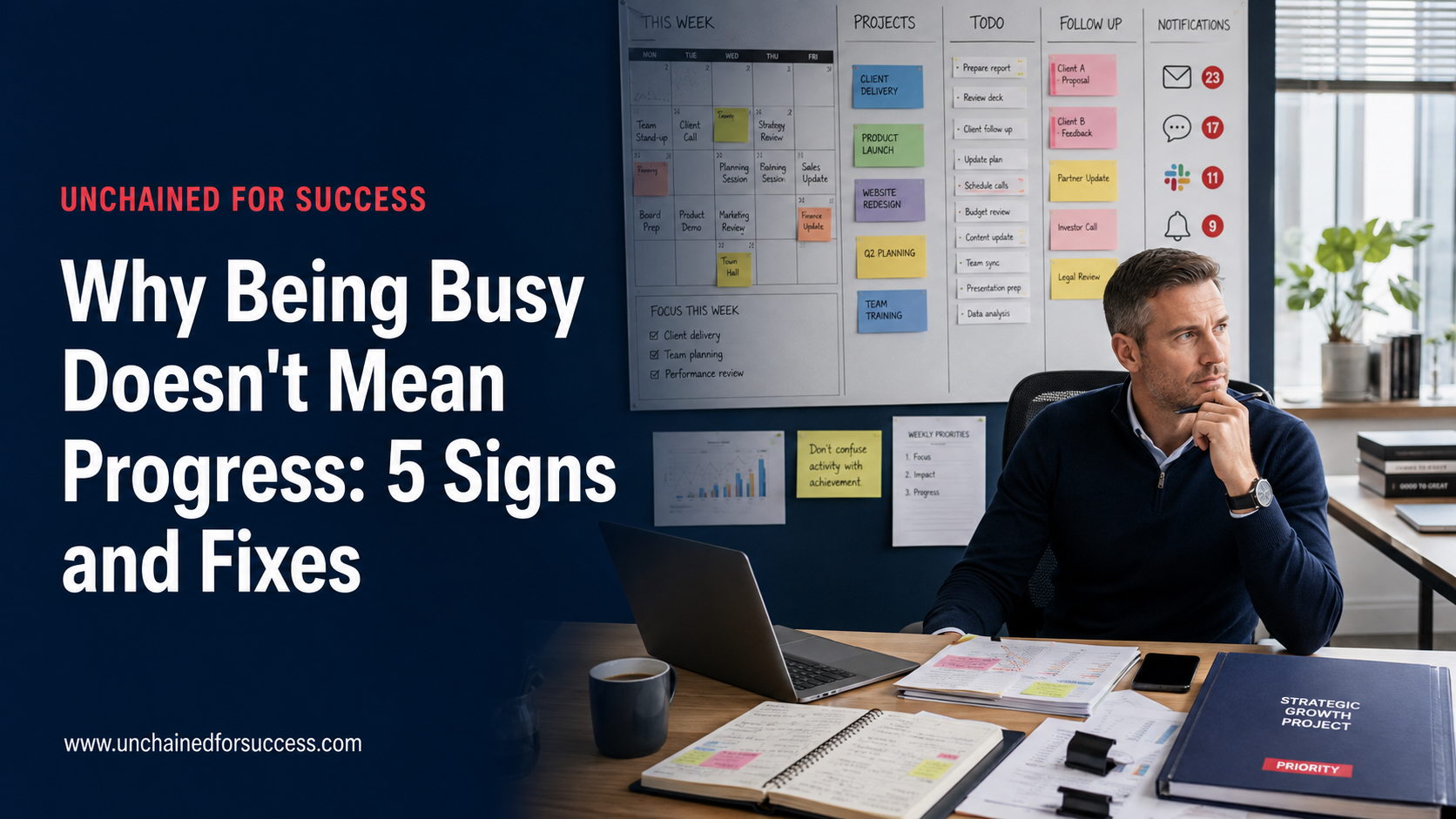
Consider statements like, "I’m so busy; just look at my calendar." When I probe further and ask if these meetings are bringing them closer to achieving their goals, the usual answer is no. Most of these meetings are distractions, pulling people away from what’s truly important.
Then there’s the cluttered desktop, filled with a myriad of documents that require constant searching to find the right attachments to send. I’ve seen this scenario play out in projects where the team appears busy, juggling various tasks, yet the programme is behind schedule. When asked why they haven’t revised the programme to include critical success milestones, the typical response is, "We have all these meetings to attend."
This busyness is often the brain’s way of avoiding tackling the most important tasks—those that require deep thought, strategic planning, and focused effort.
This topic is particularly important to me, as I encounter it daily, and it sometimes saddens me to see how widespread it is.
Busy but not Productive’ as a Habit
People often think of habits as unconscious behaviours or routines, but being busy without being productive can also become a habit. The feeling of importance that comes from attending or being invited to every meeting fuels dopamine, reinforcing this behaviour. Even when individuals become aware that they are always busy but not productive, they may still take pride in their busyness rather than striving for effectiveness. It’s important to recognise that you may have become addicted to being busy. This awareness can help you employ tools to break the habit.
Understanding Effective Goal Management
Effective goal management isn’t about filling your day with tasks or responding to every email. It’s about intentionally setting and pursuing goals that align with your overarching vision and purpose. In a project setting, it involves identifying specific critical actions for your role that will enable you and your team to make tangible progress towards the ultimate goal. My goals framework emphasises the importance of setting goals that are:
- Aligned with Your Vision/Purpose/Ultimate Goal: Every task or meeting should contribute to your broader purpose or the organisation’s immediate goal. If it doesn’t, reconsider its value. Don’t just attend a meeting because you fear missing out. Set meetings with clear objectives and outputs that contribute to the organisational or project objectives you are pursuing.
- Specific and Challenging: Goals should be clear and challenging enough to push you beyond your comfort zone, yet still achievable. I often see this in construction project management, where the goals are achievable but require significant effort, leading people to remain in their comfort zones. In the end, they miss easy goals, creating issues. Stretch yourself to build ‘float’ in your goals.
- Measurable: Without metrics, you can’t track your progress. It’s essential to know whether you’re moving closer to your goals or merely staying busy.
- Time-bound: Deadlines create urgency and help prioritise tasks that align with your goals, ensuring that you’re not just busy, but productive. Avoid ‘talking shop’ meetings where several issues are discussed without setting deadlines for delivering outputs. Be clear on what needs to be done and by when.
The Hidden Costs of Ineffective Goal Management
When your day is filled with non-essential tasks, the hidden costs are significant:
- Mental and Emotional Costs: Constant busyness without clear progress leads to stress, frustration, and eventually burnout. You might find yourself exhausted at the end of the day, yet unsatisfied because your core objectives remain untouched. This can lead to a desire to change jobs, a feeling I’ve observed in many individuals.
- Opportunity Costs: Time spent on low-impact activities takes away from those that could significantly advance your personal or professional goals. Every hour in an unnecessary meeting is an hour not spent on strategic planning or skill development.
- Impact on Self-Efficacy: Ineffective goal management diminishes your confidence and motivation. As you fail to achieve meaningful milestones, you begin to doubt your abilities, creating a negative feedback loop that further hampers productivity.
Strategies for Effective Goal Management
To avoid the pitfalls of ineffective goal management, consider the following strategies:
- Prioritise Aligned Tasks: Begin your day by identifying tasks that directly contribute to your key goals. If a task doesn’t align with your vision or long-term objectives, delegate it, defer it, or discard it. If you can’t identify the five most critical tasks you need to complete that day to move towards your objective, that may be why you’re behind on your goals. As Brian Tracy famously says, "Eat that Frog"—undertake the most critical actions first, not the easiest ones. Your brain is likely to nudge you towards tasks that are mostly meaningless because tackling the most impactful actions requires effort, and the brain tends to conserve energy.
- Create Effective Meetings: Be clear about the objectives of the meeting. What are the critical outputs that will support the goal? Are those invited really contributing to anything? Do they really need to be there? Do you really need a meeting at all?
- Utilise My Goals Framework: Rather than relying on a packed calendar, use the framework to evaluate whether your daily actions are moving you closer to your goals. Ask yourself if each task is critical, specific, measurable, and aligned with your purpose. Are you tackling the easy tasks or the ones that will give you the most return on your time? Remember, time is the one resource you can never recover. Once an hour is gone, it’s gone forever, so don’t waste your life.
- Regularly Review and Adjust: Your goals and circumstances will evolve. Make it a habit to regularly review your progress and adjust your goals as needed to ensure they remain relevant and challenging.
- Daily Reflection: Learn lessons daily. Review your actions at the end of each day and assess what you did well and what you could improve. Reflect and consider how you will do better the next day.
Conclusion
Being busy is easy; being productive is an art. The hidden cost of ineffective goal management isn’t just wasted time but also missed opportunities for growth and achievement. By aligning your actions with your core goals and purpose, you can transform your busyness into meaningful productivity. Evaluate your current practices, make the necessary adjustments, and watch as you move closer to your goals with intention and clarity.
Research Sources:
- Tracy, B. (2001). Eat That Frog! San Francisco: Berrett-Koehler Publishers.
- Covey, S. R. (1989). The 7 Habits of Highly Effective People. New York: Simon & Schuster.
- Drucker, P. F. (1967). The Effective Executive. New York: Harper & Row.
- McKeown, G. (2014). Essentialism: The Disciplined Pursuit of Less. New York: Crown Business.
- Newport, C. (2016). Deep Work: Rules for Focused Success in a Distracted World. New York: Grand Central Publishing.
- Kwegyir-Afful, C (2023) Unchained: Success Unlocked – A Proven Framework for Achieving Your Goals
Continue Your Journey
Explore more resources from the Unchained Goals Framework: