
Introduction: The Power of Being Answerable
This month’s theme is Belief Systems—a core pillar of the goals framework shared in my book Unchained: Success Unlocked. But before belief can truly take root, one of the most effective reinforcements is accountability.
Accountability is one of those quiet forces that can mean the difference between a goal achieved and a goal abandoned. I’ve seen this not only in my own life but also in projects, clients, and individuals I’ve supported. Whether it’s a fitness goal, writing a weekly blog (as I’ve done for over a year now), or completing a multi-year programme—having someone or something hold you accountable makes a world of difference.
In the past few weeks, we’ve explored habits and limiting beliefs. This blog now shifts the lens to how accountability strengthens belief, increases commitment, and drives lasting success.
What Is Accountability?
Accountability is the act of being responsible for one’s actions and decisions. It’s when you take ownership of your commitments and either answer to yourself or others. In Clement Kwegyir-Afful’s Goals Framework outlined in Unchained, accountability is a tool that reinforces the belief system and helps you stick to your goals when willpower fades.
There are three main types of accountability:
- Personal Accountability – Owning your own growth and decisions.
- Peer Accountability – Being answerable to a friend, coach, or mentor.
- Organisational Accountability – Systems, processes, and team dynamics that track progress and performance.
How Accountability Influences Goal Achievement
Research backs what many of us intuitively know: we do better when we know someone is watching or we’ve publicly committed to a goal.
- Locke & Latham (2002) found that when people publicly commit to goals, their performance significantly improves.
- Gollwitzer & Oettingen (2001) showed how forming “implementation intentions” (e.g. If X happens, then I will do Y) combined with accountability dramatically closes the intention-behaviour gap.
- Webb & Sheeran (2006) found people were more likely to follow through on intentions when they added accountability structures.
Real-Life Examples of Accountability Driving Success
- J.K. Rowling wrote much of Harry Potter as a struggling single mother. What kept her going? The deep accountability she felt to provide for her daughter and to finish what she started.
- Kobe Bryant, despite his fame, held himself to gruelling standards. He’d show up at 4am to practise because he was accountable to being the best version of himself—no excuses.
- My own blog journey is one I’m proud of. Committing to write and post every week gave me external accountability. Even on difficult weeks, knowing someone might be waiting for a word of encouragement kept me consistent.
Forms of Accountability That Work
There’s no one-size-fits-all, but here are some tried-and-tested options:
- Accountability Partners – Whether it’s a friend, spouse, or coach, sharing your goal with someone increases your likelihood of success.
- Group Accountability – Join or create masterminds, WhatsApp groups, or team stand-ups that encourage weekly check-ins.
- Technology Tools – Use tools like Trello, Notion, Streaks, or even your phone calendar to track tasks.
- Public Commitment – Announce your goals on social media or in meetings—it creates healthy pressure.
How to Build Accountability Into Your Goal Strategy
Let’s bring it closer to home. Here’s how to integrate accountability into your strategy using the Unchained framework:
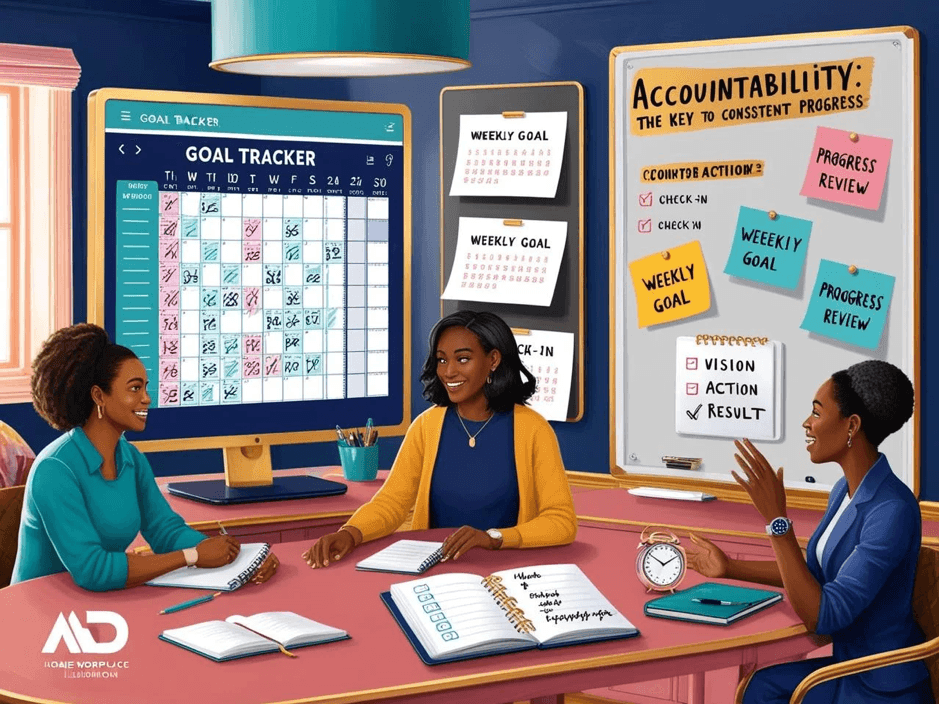
- Set Clear Goals – Be specific and measurable. Vague goals can’t be tracked.
- Break Goals into Actions – Turn the long-term vision into monthly and weekly objectives.
- Use Tools That Work for You – I use GoodNotes 6 with a TODO template and track my actions digitally.
- Track Consistently – I have digital reminders that pop up when tasks are due—sometimes, that gentle nudge is all I need to stay on track.
- Review Weekly – Reflect on what’s working and what’s not. Adjust.
- Celebrate Wins – Recognise milestones. Share your progress with those supporting you.
The Link Between Accountability and Belief Systems
Accountability doesn’t just drive action—it reinforces belief. Here’s how:
- You see results – You start believing you’re capable.
- You receive feedback – Whether positive or constructive, it fuels your belief that growth is possible.
- You stay consistent – Beliefs are strengthened by repetition and validation.
Conclusion: Make Accountability a Non-Negotiable
Accountability isn’t a crutch—it’s a power tool. It amplifies your focus, strengthens your belief, and keeps your goals on track.
Ask yourself today:
- Who am I accountable to?
- What systems have I put in place to keep me focused?
- How am I reinforcing my belief in myself?
Ready to Go Deeper?
To reinforce your accountability journey:
- Read these past blogs to gain deeper insight:
- Small Steps, Big Impact: Building Consistent Habits (https://unchainedforsuccess.com/small-steps-big-impact-building-consistent-habits/)
- Tools to Track and Build Better Habits (https://unchainedforsuccess.com/tools-to-track-and-build-better-habits/)
- Staying Committed: Habit Hacks for Everyday Life (https://unchainedforsuccess.com/staying-committed-habit-hacks-for-everyday-life/)
- Get a copy of Unchained: Success Unlocked - A Proven Framework for Achieving Goals on Amazon.
- Reflect with a journal prompt: “Who is my accountability partner this year, and what will they hold me to?”
References
- Locke, E. A., & Latham, G. P. (2002). Building a practically useful theory of goal setting and task motivation. American Psychologist.
- Gollwitzer, P. M., & Oettingen, G. (2001). Implementation intentions and effective goal pursuit. Journal of Personality and Social Psychology.
- Webb, T. L., & Sheeran, P. (2006). Does changing behavioral intentions engender behavior change? A meta-analysis of the experimental evidence. Psychological Bulletin.
- Kwegyir-Afful, C. (2023). Unchained: Success Unlocked – A Proven Framework for Achieving Your Goals.
- Psychology Today. (n.d.). How Accountability Drives Motivation and Follow-Through.
Continue Your Journey
Explore more resources from the Unchained Goals Framework: